

Locked, Loaded, and Divided: The True State of Gun Control in America (2025 Deep Dive)
From Red Flag laws to the fallout of the Supreme Court's ghost gun rulings, gun control in America has never been more polarizing. Here’s a full-spectrum breakdown.

Introduction
Gun control in the United States remains one of the most contentious political and cultural flashpoints of our time. Every mass shooting, every school lockdown, and every viral video reignites a seemingly endless debate between public safety and Second Amendment rights. In 2025, that debate has only intensified, fueled by rising gun violence statistics, record gun sales, and fractured political will.
With more than 400 million firearms in civilian hands—more guns than people—the U.S. gun control conversation is no longer just about background checks or assault weapons. It’s about identity, freedom, fear, and the balance between security and liberty. From Florida to California, from Chicago to small-town Texas, policies vary widely. Meanwhile, tech companies, lobbyists, and advocacy groups like the NRA, Giffords, Everytown, and the National Shooting Sports Foundation (NSSF) influence both public opinion and legislation.
This comprehensive blog post dives into the current gun control laws, the impact of school shootings, the legal tug-of-war in state legislatures, and the cultural and technological dynamics shaping America's gun future.

Quick Summary / Key Takeaways
-
The U.S. has more than 400 million civilian-owned guns in circulation as of 2025.
-
School shootings and mass violence continue to push policy debates and legal reforms.
-
Red Flag laws, ghost gun restrictions, and expanded background checks are gaining traction.
-
Major players include the NRA, Giffords, Everytown, NSSF, and firearms manufacturers like Smith & Wesson, Glock, and SIG Sauer.
-
Supreme Court rulings and state-specific laws are driving nationwide disparity in regulations.
Background & Relevance
The Numbers That Matter
-
According to the Gun Violence Archive, there have been over 350 mass shootings in 2025 (as of July).
-
The U.S. firearm death rate stands at 14.6 per 100,000 people, the highest among developed nations.
-
Nearly 80% of homicides in the U.S. involve a firearm.
The Cultural Divide
Gun ownership in America has deep roots in history, mythology, and self-perception. For many, guns symbolize freedom, protection, and individualism. For others, they represent violence, risk, and trauma. These perceptions vary drastically across geography, race, income, and political ideology.
Current Gun Control Laws in the U.S.
Federal Framework
Background Checks
The Brady Handgun Violence Prevention Act requires background checks for firearms purchased from licensed dealers. However, the "gun show loophole" and private sales remain largely unregulated federally.
Assault Weapons Ban (Expired)
The federal Assault Weapons Ban expired in 2004. Efforts to reinstate it, especially after high-profile school shootings like Uvalde (2022) and Nashville (2023), have consistently failed in Congress.
Bipartisan Safer Communities Act (2022)
The most recent federal action included:
-
Enhanced background checks for buyers under 21
-
Funding for mental health and school safety
-
Incentives for states to adopt Red Flag laws
Supreme Court Decisions
New York State Rifle & Pistol Association v. Bruen (2022)
-
Invalidated concealed carry restrictions based on "just cause."
-
Established a "history and tradition" test that has made it harder for states to pass new gun laws.
Garland v. Cargill (2024)
-
Ruled that bump stocks are not machine guns, sparking controversy.
Bondi v. VanDerStok (2025)
-
Focused on ghost gun component regulation. Final decision expected late 2025.
State-Level Innovations and Tensions
Red Flag Laws
Adopted in 21 states including:
-
California
-
Florida (post-Parkland shooting)
-
Illinois (Karina's Law, 2025)
Permit-to-Purchase and Licensing
Strong in:
-
Massachusetts
-
New Jersey
-
Hawaii
Weak or absent in:
-
Texas
-
Mississippi
-
Arizona
Concealed & Open Carry
-
Permitless Carry: Now legal in 27 states including Texas, Tennessee, and Georgia.
-
Restricted Carry: New York, California, and Maryland have retained stricter requirements despite legal challenges.
The Role of Schools and Mass Shootings
Frequency and Impact
-
There have been over 70 school shootings in 2025 alone.
-
More than 100,000 children experienced a school lockdown related to a gun threat this year.
Famous Incidents
-
Robb Elementary (Uvalde, TX, 2022)
-
Covenant School (Nashville, TN, 2023)
-
Northgate Middle School (Ohio, 2025)
Legislative Response
-
Safe Schools Act in Michigan
-
Secure Our Schools Fund federally reauthorized in 2024
-
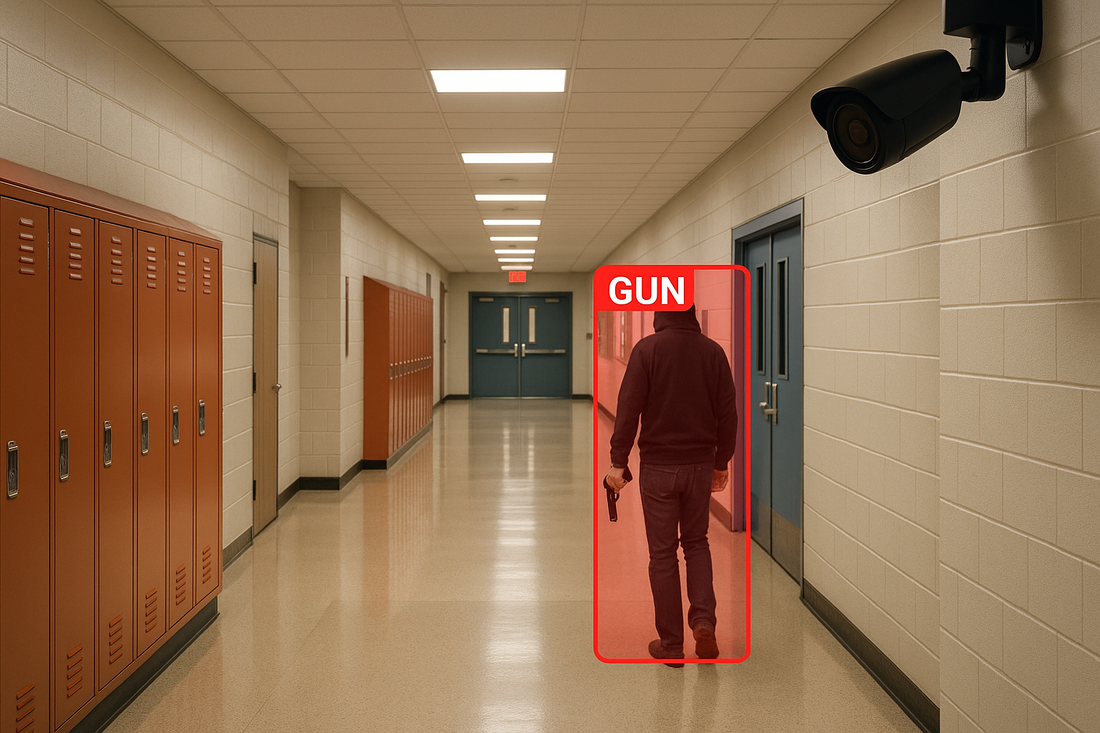
Controversial initiatives include arming teachers, active shooter drills, and the use of AI surveillance systems (including companies like ZeroEyes and Evolv Technologies).
Gun Lobby vs Gun Safety Advocates
The NRA (National Rifle Association)
-
Once a political powerhouse, now weakened by financial scandals and leadership changes.
-
Still influential, especially in red states.
Giffords
-
Led by former Congresswoman Gabby Giffords.
-
Focus on legislation, survivor advocacy, and research.
Everytown for Gun Safety
-
Backed by Michael Bloomberg.
-
Focus on data, grassroots organizing, and election influence.
National Shooting Sports Foundation (NSSF)
-
Represents gun manufacturers and retailers.
-
Strong at trade shows (SHOT Show) and in regulatory lobbying.
Brands, Firearms, and Industry Players
Top Manufacturers
-
Glock (Austria/USA)
-
Smith & Wesson (USA)
-
SIG Sauer (Germany/USA)
-
Ruger (USA)
-
Beretta (Italy/USA)
Retail Chains
-
Cabela’s / Bass Pro Shops
-
Academy Sports
-
Walmart (limited firearm sales)
Digital Sales & Ghost Guns
-
DIY ghost gun kits are under scrutiny due to their use in crimes.
-
Companies like Polymer80 are under ongoing legal pressure.
Technology and AI in Gun Detection
Gun Detection AI
-
ZeroEyes: Deploys AI in schools and public buildings to detect firearms from surveillance feeds.
-
Evolv Technologies: Touchless weapons detection at venues.
Surveillance and Alert Systems
-
Integrated with law enforcement response platforms like ShotSpotter, Genetec, and ArcadianAI.
-
Facial recognition tools and behavioral analytics being trialed in several school districts.
Common Questions (FAQ)
1. Why is gun control such a divisive issue in the U.S.?
Because it touches on constitutional rights (Second Amendment), personal identity, public safety, and cultural beliefs.
2. What is a Red Flag Law?
Allows law enforcement or family members to petition courts to temporarily remove firearms from someone deemed a threat.
3. Are school shootings increasing?
Yes. 2025 has seen a record number of school gun incidents, according to the Gun Violence Archive.
4. Can AI really stop mass shootings?
AI helps with early detection, but experts agree it's one layer in a much larger strategy of prevention, mental health care, and policy reform.
5. What is the ghost gun loophole?
Unserialized, untraceable firearm parts that can be purchased online and assembled without background checks.
6. Is the NRA still powerful?
Yes, especially in conservative states and in national lobbying, but its influence is declining relative to public opinion.
Conclusion & CTA
Gun control in America is not a linear issue. It's a web of laws, values, industries, and emotions. From the Supreme Court to local school boards, every level of government and community is grappling with how to protect both freedom and lives.
As AI-powered platforms like ArcadianAI enhance detection and response capabilities, technology is poised to play a bigger role—but without comprehensive legislative action, the cycle of reaction over prevention will continue.
Want to explore smarter surveillance to protect your school, business, or property?

Security is like insurance—until you need it, you don’t think about it.
But when something goes wrong? Break-ins, theft, liability claims—suddenly, it’s all you think about.
ArcadianAI upgrades your security to the AI era—no new hardware, no sky-high costs, just smart protection that works.
→ Stop security incidents before they happen
→ Cut security costs without cutting corners
→ Run your business without the worry
Because the best security isn’t reactive—it’s proactive.


