

Why Retail Security Is Broken
Walk into any retail backroom and you'll likely find a dusty corner occupied by a blinking black box—the network video recorder (NVR). For decades, NVRs have been the backbone of video surveillance systems in retail stores. But times have changed. AI is transforming every aspect of retail, from checkout to...
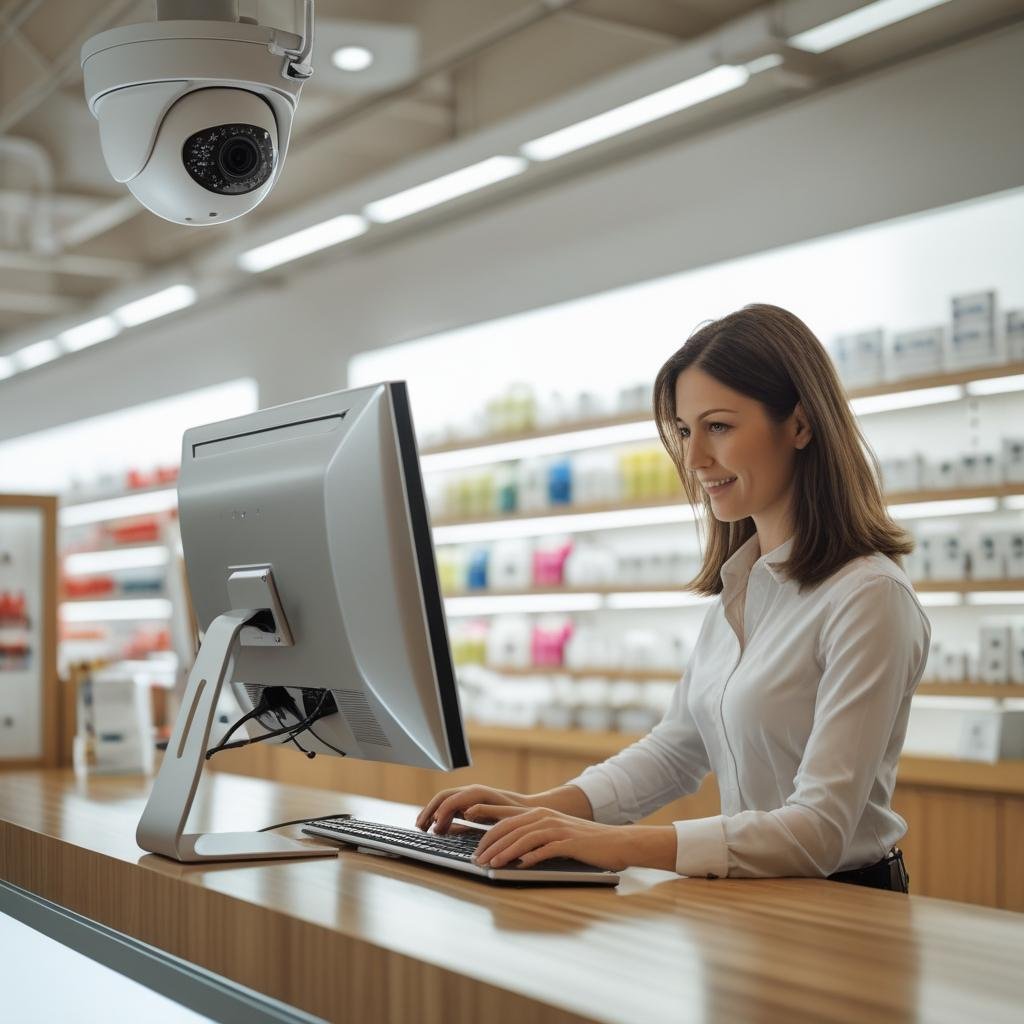
- The Hidden Costs of Old NVR-Based Surveillance Systems
- Reverse Thinking: You’re Paying for “Ownership”—But Losing Control
- The Smarter Alternative: Cloud + AI Surveillance for Retail
- Case Study: How a Retail Chain Cut Losses by 38% with AI Surveillance
- Why Retailers Need to Rethink Search, Discovery, and Insights
- Quick Comparison: NVR vs AI Surveillance
- Retail Applications of AI Surveillance
- Addressing Common Objections
- Don’t Let Legacy Tech Drain Your Future
- FAQs:
Walk into any retail backroom and you'll likely find a dusty corner occupied by a blinking black box—the network video recorder (NVR). For decades, NVRs have been the backbone of video surveillance systems in retail stores. But times have changed. AI is transforming every aspect of retail, from checkout to customer service—yet security is still trapped in the past.
And it’s costing retailers more than they realize.
Whether you're managing a single boutique or hundreds of chain stores, relying on outdated NVRs can result in:
- Missed theft events
- Downtime during critical incidents
- Expensive hardware failures
- Hidden operational inefficiencies
- Untapped video footage that could drive profits
In this post, we’ll break down exactly how legacy NVRs are draining your retail business—and how a smarter, AI-powered, cloud-native surveillance alternative can flip your losses into gains.
The Hidden Costs of Old NVR-Based Surveillance Systems
1. Theft and Losses Go Undetected
Retailers lose over $100 billion globally to shrinkage each year, with North America accounting for over $100 million per day. While shoplifting and organized retail crime (ORC) are often blamed, internal theft and poor detection are equally responsible.
Why do NVRs fail?
- They rely on motion-detection or line-crossing alerts with high false-positive rates.
- There’s no semantic understanding—no ability to interpret behavior or context.
- Events are only reviewed after an incident, if someone even bothers.
NVRs are passive. They record. That’s it.
🛑 Impact: According to NRF and Statista, over 55% of theft incidents are never investigated due to lack of actionable footage or context. This leads to recurring theft and a sense of impunity.
2. Footage Is Rarely Watched—Even During Investigations
Up to 94% of retail video footage is never reviewed. It just sits there, wasting storage space and opportunity.
Why?
- Reviewing footage manually is time-consuming and often requires technical expertise.
- Most NVRs don’t support advanced video search—just scrubbing timelines.
- By the time footage is reviewed, the damage is done.
📉 Think of it like having a warehouse full of inventory—and never checking it. You wouldn’t accept that. So why accept it for your surveillance?
3. Hardware Failures and Storage Risks
Old NVRs break—often silently.
- Hard drives fail without warning.
- Overheated units record nothing but blank screens.
- Footage is overwritten after a short retention window (often just 7-30 days).
- There's no backup if the unit is stolen or destroyed.
- The worst part? You usually don’t know something went wrong until you need the footage—and it’s gone.
🛠️ On-site storage is vulnerable. Cloud-based video surveillance systems offer automatic backups, remote access, and multi-site failover.
4. NVR Maintenance Costs Add Up
NVR systems may seem cheaper upfront. But they demand:
- Regular firmware updates
- Manual configuration
- Expensive on-site servicing
- Proprietary storage expansions
- Risky firewall exceptions and port forwarding
- Over time, this adds hidden costs in both dollars and downtime.
⏳ According to Deloitte, IT-related downtime costs retailers an average of $5,600 per minute during operational disruptions. Every minute of delay impacts profits.
Reverse Thinking: You’re Paying for “Ownership”—But Losing Control
It’s easy to think: “We own the hardware, so we’re in control.” But in reality:
- You don’t control how often it's updated
- You don’t know when it breaks
- You don’t know if footage is lost
- You can't scale instantly
- You can’t get proactive insights
Ownership without intelligence is a liability. In contrast, AI surveillance systems offer active monitoring, predictive alerts, and business insights—not just video archives.
The Smarter Alternative: Cloud + AI Surveillance for Retail
Enter cloud-based video surveillance with AI-powered monitoring—a transformative approach now being adopted by top-performing retailers.
ArcadianAI is leading the charge by offering camera-agnostic, cloud-first, and AI-driven solutions tailored for retail environments.
Here’s what modern systems bring to the table:
🔍 Real-Time AI Event Detection
No more reacting hours or days later. AI security solutions now detect:
- Loitering near exits or POS
- Unusual movement in stockrooms
- Unattended people during off-hours
- Suspicious interactions between staff and merchandise
With semantic AI, the system understands behavior—not just motion. That’s why AI security cameras are 6x more effective in detecting real threats compared to NVRs relying on motion triggers.
🧠 Forensic Search in Seconds
Looking for a man in a red hoodie entering after hours across 100 stores? Type it in.
Cloud video platforms like ArcadianAI offer natural-language search across all connected cameras using frame indexing and object recognition.
🕵️♀️ What used to take hours now takes seconds—with verified alerts, summaries, and intelligent playback.
💡 Business Insights from Your Cameras
Security footage isn’t just for loss prevention.
Smart systems use predictive analytics in security to offer:
- Customer heat maps
- Queue analysis
- Shelf engagement
- Staff movement trends
- Zone-based footfall reports
These insights help you improve layout, staffing, and customer experience—boosting sales while reducing shrink.
📈 Think of AI surveillance as a business improvement system, not just a security tool.
🌐 Centralized, Multi-Site Management
Got 20, 100, or 500 stores?
Legacy NVRs require you to log in to each one individually. Cloud-based systems provide a central dashboard for everything:
- View all locations live
- Receive consolidated alerts
- Manage access control remotely
- Push updates to every camera
- Monitor uptime & health status
For franchises and chain stores, multi-site security management is a must-have, not a nice-to-have.
🧩 Integrations with POS, Alarms, and Access Control
Modern platforms don’t operate in silos.
ArcadianAI connects to:
- POS terminals (to detect refund abuse, sweet-hearting)
- Fire alarm systems (to record during emergencies)
- Access control systems (to verify identity matches)
- ERP and BI dashboards (to align security with operations)
🤖 It’s security-as-a-service with intelligence baked in—not an outdated black box.
Case Study: How a Retail Chain Cut Losses by 38% with AI Surveillance
A 70-location apparel retailer in Canada replaced its legacy NVRs with ArcadianAI’s cloud camera system and Ranger AI.
Results in 6 months:
- Theft reduced by 38%
- 72% reduction in false alarms
- Video review time dropped from 3 hours/week to 12 minutes/week
- Increased detection of internal theft during closing hours
- AI-generated footage used in staff training and layout planning
💬 “We thought surveillance was just for catching thieves. Now it’s helping us run a better business.” – Regional Manager
Why Retailers Need to Rethink Search, Discovery, and Insights
This shift isn’t just physical—it’s digital.
Retailers are now searching for:
- “best AI surveillance system for retail”
- “cloud security cameras for stores”
- “video surveillance with business analytics”
- “NVR replacement for chain stores”
- “AI video monitoring vs traditional security systems”
Your competitors are upgrading. Customers are expecting safer spaces. Search trends show a 40% YoY increase in queries like “smart retail security” and “AI-powered loss prevention.”
You either adapt—or become the example in someone else’s success story.
Quick Comparison: NVR vs AI Surveillance
|
Feature |
Legacy NVR |
AI Cloud Surveillance |
|
Storage |
On-site only |
Cloud + Redundancy |
|
Accessibility |
Local Network |
Anywhere, Anytime |
|
Alerts |
Motion-based |
AI-based with context |
|
Search |
Manual timeline |
Natural-language, instant |
|
Scalability |
Manual setup per site |
Centralized management |
|
Cost over time |
High (hardware + support) |
Predictable SaaS pricing |
|
Business insights |
None |
Built-in analytics |
|
Risk of loss |
High (theft/fire) |
Minimal with cloud backup |
Retail Applications of AI Surveillance
Here’s how AI-powered surveillance is already reshaping retail operations:
🛍️ Loss Prevention
Catch organized retail crime (ORC), employee theft, refund fraud.
👩💼 HR & Operations
Identify productivity bottlenecks, track compliance with policies.
🧹 Safety & Liability
Detect spills, blocked exits, and unsafe customer/staff behavior.
💬 Customer Experience
Analyze wait times, zone popularity, and staff responsiveness.
🛒 Merchandising
Understand how customers interact with displays and layouts.
Addressing Common Objections
❌ “But I already have an NVR system.”
💡 Upgrade isn’t about replacement—it’s about augmentation and future-proofing. Many platforms, including ArcadianAI, are camera-agnostic and integrate with existing hardware.
❌ “Cloud is less secure.”
✅ Actually, it’s the opposite. Leading systems offer end-to-end encryption, access controls, and detailed audit logs—far more secure than a closet NVR with a default password.
❌ “We can’t afford it.”
🧾 Affordability isn’t about upfront cost—it’s about total cost of ownership. Between loss prevention, staff efficiency, and risk reduction, AI surveillance pays for itself in months.
Don’t Let Legacy Tech Drain Your Future
NVRs were built for a world that no longer exists.
Retail is now real-time, multi-site, and data-driven. Your security should be too.
ArcadianAI helps retailers modernize their surveillance without replacing all hardware. With our AI-powered monitoring assistant, Ranger, we turn video into visibility—and visibility into profit.
FAQs:
1. What is the main problem with using traditional NVR systems in retail stores?
Traditional NVR systems are passive—they record video but don’t interpret or analyze behavior in real time. They depend on basic motion detection, are prone to hardware failures, offer limited search functionality, and often store footage locally without backup. This leads to undetected theft, delayed responses, and missed opportunities to improve operations.
2. How does AI surveillance differ from NVR-based systems?
AI surveillance uses semantic understanding and real-time analysis of video footage. Unlike NVRs, AI systems detect behaviors like loitering, refund fraud, or unsafe movement. They offer natural-language search, contextual alerts, business insights, and remote access via the cloud—making surveillance smarter and more actionable.
3. Can AI-powered systems like ArcadianAI work with my existing cameras?
Yes. ArcadianAI is camera-agnostic, meaning it can integrate with most existing IP-based security cameras. This enables you to modernize your surveillance without completely replacing your current hardware—saving costs while boosting capabilities.
4. Isn’t cloud surveillance less secure than on-site storage?
Actually, cloud-based systems are more secure. ArcadianAI provides end-to-end encryption, secure user authentication, role-based access controls, and audit logs. In contrast, legacy NVRs are often stored in accessible backrooms with default credentials and no monitoring.
5. What are some business insights I can gain from AI surveillance?
AI surveillance systems do more than prevent loss. With ArcadianAI, you can access: heatmaps of customer movement, queue and checkout wait-time analysis, staff efficiency reports, and merchandising engagement data. These insights help in store layout optimization, staff planning, and enhancing customer experience.
6. How does AI reduce false alerts and improve incident detection?
AI systems use behavioral models, object recognition, and contextual awareness to differentiate real threats from false alarms. For example, Ranger AI from ArcadianAI identifies unusual patterns like loitering after hours or restricted area entry—leading to a 72% reduction in false alerts as seen in client case studies.
7. How scalable is a cloud-based surveillance solution for multi-store retailers?
Extremely scalable. ArcadianAI provides centralized management where you can monitor and manage hundreds of store locations from a single dashboard. This includes unified alerts, multi-site video access, health monitoring, and remote configuration—something NVRs cannot do efficiently.
8. What happens if my internet connection goes down?
ArcadianAI is designed for resilience. Many AI cloud systems support edge recording, where the camera temporarily stores footage locally during internet outages and syncs it to the cloud once connectivity is restored. This ensures minimal data loss and continuous surveillance.
9. Is AI surveillance cost-effective for small to medium-sized retailers?
Yes. While initial costs may appear higher, the total cost of ownership is lower over time. Retailers save on reduced theft losses, fewer false alarms and investigations, lower maintenance and servicing, and operational efficiency gains. Most clients report ROI within 6–12 months of deployment.
10. How can I get started with ArcadianAI?
You can start by requesting a free demo on ArcadianAI’s website. The team will assess your current setup, discuss integration options, and show you how their AI-powered monitoring assistant, Ranger, can transform your retail security and operations.
Get a free demo and see how ArcadianAI can help you reduce theft, save time, and future-proof your retail operations.

Security is like insurance—until you need it, you don’t think about it.
But when something goes wrong? Break-ins, theft, liability claims—suddenly, it’s all you think about.
ArcadianAI upgrades your security to the AI era—no new hardware, no sky-high costs, just smart protection that works.
→ Stop security incidents before they happen
→ Cut security costs without cutting corners
→ Run your business without the worry
Because the best security isn’t reactive—it’s proactive.
Is your security keeping up with the AI era? Book a free demo today.
You may also like


- Le choix d'une sélection entraîne l'actualisation de la page entière.
- S'ouvre dans une nouvelle fenêtre.